Article from https://conservativepost.co.uk/
Yesterday, Downing Street attempted to brush aside something deeply significant with a single phrase, “self-appointed.”
That is how they chose to describe the Chagossian Government-in-Exile, a body that was not conjured up behind closed doors, not imposed from above, but formed through a democratic process involving the very people whose lives and futures are at stake.
I should know. I organised it.
So let’s be absolutely clear, this was not “self-appointed.” It was voted for, it was structured, it was verified, and it followed the very same principles and safeguards that government itself relies on when it wants to claim democratic legitimacy.
That is what makes the government’s response not just dismissive, but deeply hypocritical.
Because the process we ran was not casual or improvised. It was the excellent idea of Dr Daniel Boucher, an expert in sovereignty and international relations. Then built with care and seriousness by the Great British PAC. We brought in individuals with direct experience of running government polling. We implemented safeguards, verified emails, controls on duplicate IP addresses, and clear participation criteria. The process was independently overseen by Whitestone Insight, a respected polling and research company known for its rigour.
We ensured accessibility, too, making the vote available in English, French, and Creole to reflect the Chagossian diaspora. And despite the fact it was organised at short notice and ran for just 48 hours, the response was remarkable.
Out of a global population we estimate at around 10,000, over 1,300 people participated. And the results were decisive.
Over 91% supported the creation of a representative government-in-exile. Nearly 99% backed the appointment of an interim First Minister.
That is not a fringe outcome. That is not a handful of voices. That is a clear, overwhelming expression of political will.
So when Labour ministers dismiss this as “self-appointed,” what they are really saying is something far more troubling, that a democratic outcome only counts when it is convenient.
Because here is the uncomfortable truth for the government, the methodology we used is not some rogue invention. It mirrors the same standards applied in consultations, polling, and civic engagement exercises that Whitehall routinely cites as evidence of public opinion.
The same checks, the same verification, the same logic of participation.
Yet when those same methods empower the Chagossian people, suddenly they are deemed invalid. Why? Because the outcome does not align with the government’s preferred narrative.
This is the heart of the issue, not process, not legitimacy, but control.
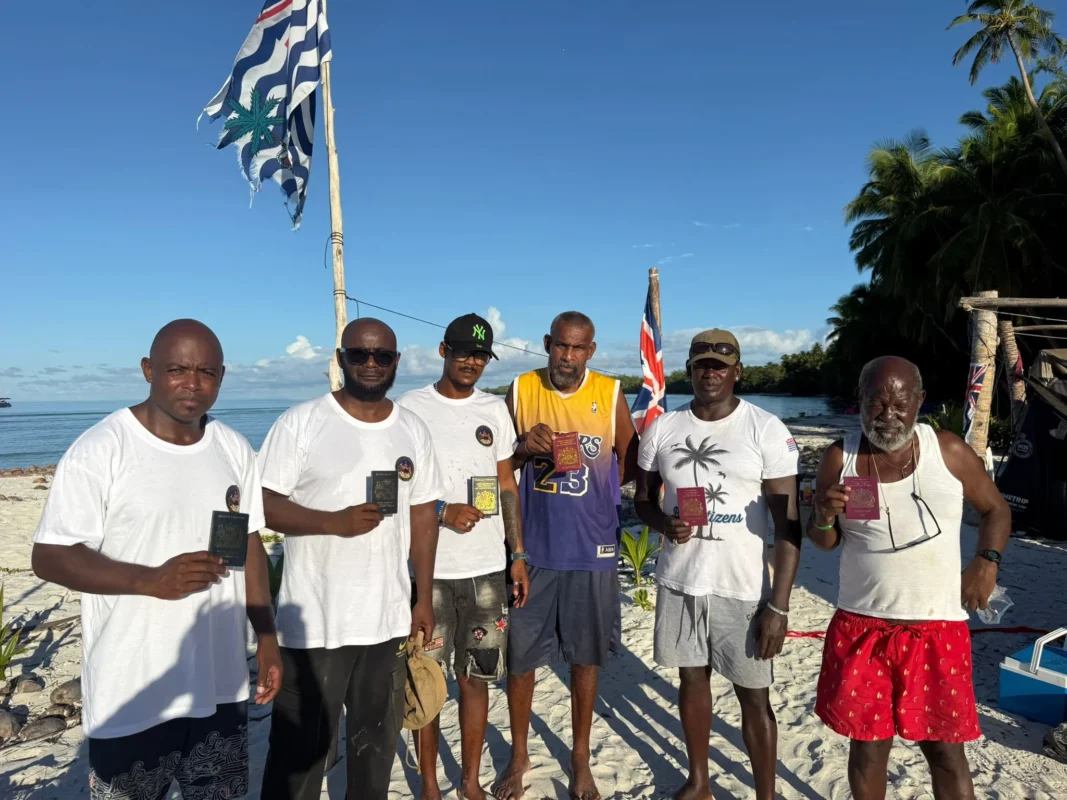
The government is currently focused on negotiations over the future of the Chagos Islands, including the strategically critical base at Diego Garcia. But in all of this, the voices of the Chagossian people themselves have too often been treated as secondary, acknowledged very occasionally in principle, but always sidelined in practice.
What we did was change that.
We created a mechanism for Chagossians to organise, to speak, and to assert representation on their own terms.
And they did.
To dismiss that as “self-appointed” is not just inaccurate. It is an attempt to undermine a democratic expression because it emerged independently of government control.
You cannot claim to champion democracy on the world stage while dismissing it when it comes from a displaced people asserting their own voice. You cannot say process matters, and then ignore it when the result is inconvenient. And you certainly cannot pretend this was anything other than what it was, a serious, structured, and independently verified attempt by Chagossians to represent themselves.
The government may refuse to recognise it. But that does not make it illegitimate.
It simply makes the government look undemocratic.
By Claire Bullivant, CEO Great British PAC