Article from https://conservativepost.co.uk/
An urgent appeal has been submitted to United Nations Special Rapporteurs accusing Sir Keir Starmer’s government of risking a “second depopulation” of the Chagos Islands, as ministers seek to remove four Chagossians who have returned to their homeland.
The legal submission, made by James Tumbridge, acting as Attorney General for the Chagossian government, calls for immediate international intervention to halt what is described as an imminent forced removal.
Campaigners warn the dispute could complicate the government’s wider plans to transfer sovereignty of the territory to Mauritius.
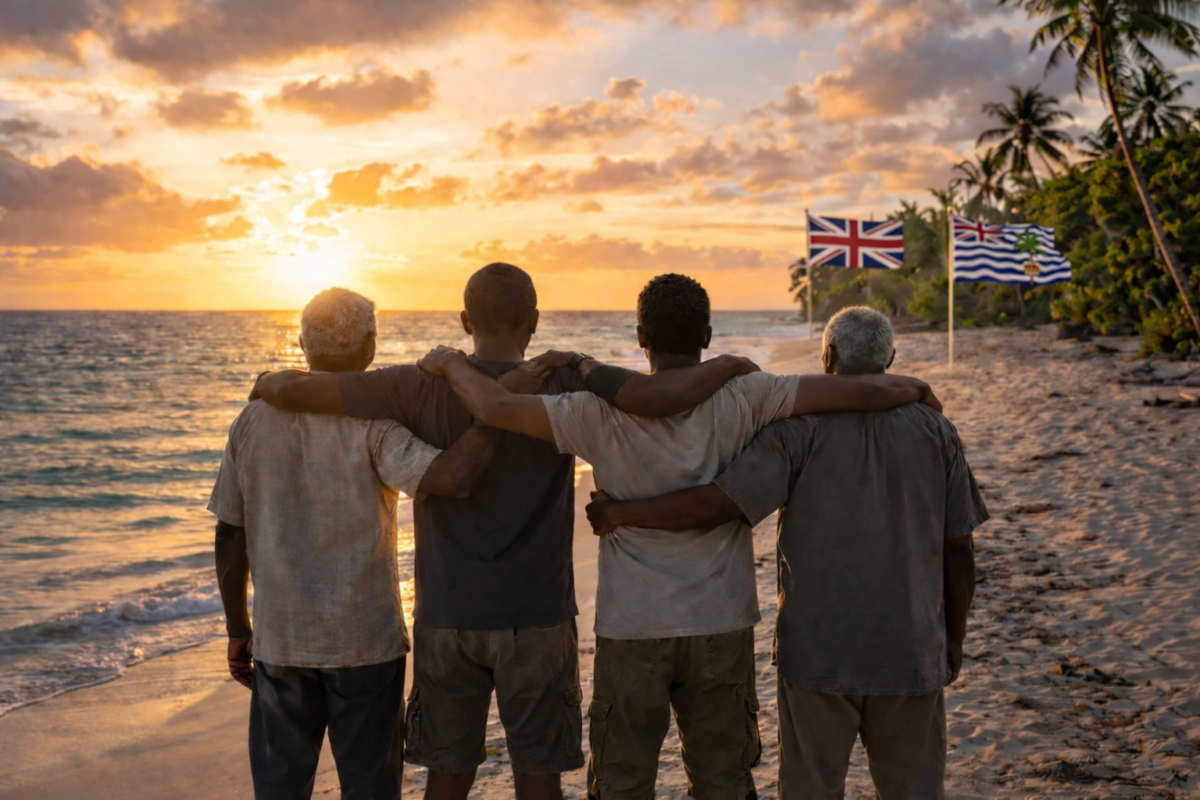
The case centres on four Chagossians who travelled to Île du Coin, part of Peros Banhos in the Chagos Archipelago, in February, including one man in his 70s who was born on the islands. Led by Misley Mandarin, the interim First Minister of the Chagossian government, the group say they had sought permits to travel to the islands but received no response from the authorities. They subsequently proceeded to the islands and chose to remain on their ancestral land, re-establishing a physical presence for the first time in decades.
Mr Mandarin was elected to his role in December 2025 following a global vote among Chagossians organised by the Great British PAC, with the process independently overseen and verified by external firms Bluetorch Consulting and Whitestone Insight.
The UK government subsequently moved to remove the group, triggering legal proceedings. An injunction was initially granted preventing their eviction, and a later ruling found in their favour, recognising a right of abode on the islands. The government is now appealing that decision.
More than 300 Chagossians are understood to have expressed an interest in resettling on the islands, underlining the broader implications of the case.
The Chagos Islands have long been the subject of international dispute. Between the late 1960s and early 1970s, a former UK Labour government removed the entire Chagossian population to facilitate the establishment of a joint UK-US military base on Diego Garcia. The removal has since been widely criticised, including by UN bodies and in a 2019 advisory opinion of the International Court of Justice.
In their submission to the UN, the claimants argue that the proposed removal of the four individuals would not be an isolated administrative act, but part of a continuing process of displacement dating back decades. They contend it would effectively complete the depopulation of the islands, eliminating the last remaining physical presence of Chagossians on their homeland.
The submission invokes a range of international legal protections, including the rights of Indigenous peoples not to be forcibly removed from their land, the right of return, and the principle of self-determination. It also argues that the case engages protections relating to minority rights and internally displaced persons.
It further claims that any removal could amount to a fresh breach of international law, and, in more serious terms, raises arguments that such actions could fall within the definition of forcible population transfer. These claims have not been tested in court.
Mr Tumbridge said:
“The BIOT commissioner, an FCDO civil servant, accepted the Chagossians were wronged in the past. How can a Prime Minister that values the rule of law and human rights not want to right that wrong and let the people return to their islands?”
Sir John Hayes MP, former Home Office Minister added:
“That Kier Starmer and his Government have treated the Chagossians with at first disregard, then with disrespect and, ultimately, with distain is clear, but still more their legal rights have been breached. So, given the weight he places on human rights laws and international bodies, he ought to welcome the right and proper reference of all this to the U.N.”
The case comes at a sensitive moment for the government as it was this week forced to pause a deal to transfer sovereignty of the Chagos Islands to Mauritius.
That proposal has already faced political and diplomatic challenges. Many Chagossians have expressed opposition to any transfer of sovereignty, arguing instead for the right to return to the islands as British citizens. Campaigners have suggested that, in time, the territory could follow a model similar to other British Overseas Territories, with local self-government under UK sovereignty.
A survey of more than 3,300 Chagossians found that over 99 per cent supported remaining under British sovereignty, with fewer than one per cent backing a transfer to Mauritius, indicating a strong level of consensus within the diaspora.
Against this backdrop, campaigners are now urging UN Special Rapporteurs to intervene. The submission calls for an immediate halt to any removal of the four individuals, clarification of the legal basis for the government’s actions, and a reminder of the UK’s obligations under international human rights law.
It also calls for formal recognition of the Chagossians as an Indigenous people, with rights to remain on and return to their ancestral lands.
The Foreign Office has been approached for comment.